Showing posts with label ecosystem. Show all posts

Wednesday, October 17, 2012

MossTiles

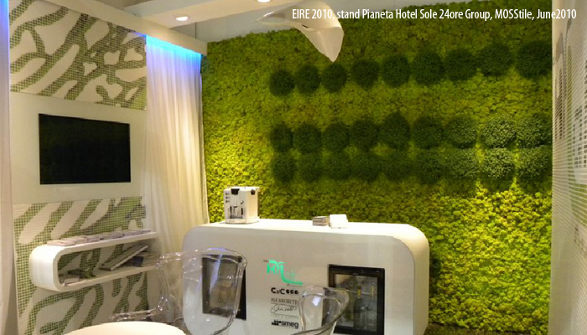
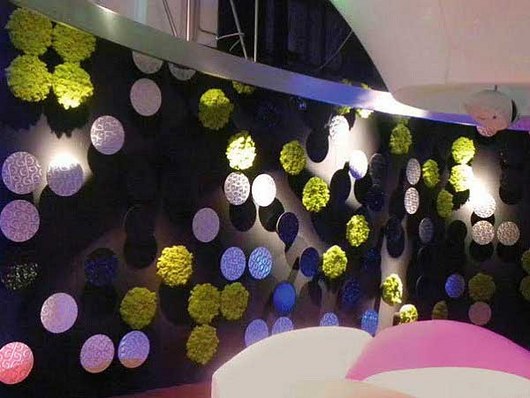
MOSStiles bring the outdoors in- without the mess!  The MOSStile is made of an ecologic resin base imbedded with natural moss for use indoors. No toxic substances are used in the making of the tile and no chemicals or fertilizers are needed to maintain them once they are installed. Maintenance is practically non-existent and no watering (except for an occasional misting) is necessary. The moss pulls all the nourishment it needs from an environment of at least 50% humidity. MOSStiles should not be placed in direct sunlight as diffuse light or even no light is best for them. And no fertilizer is required. These modular living tiles come in 12 different shades.


Just imagine the beautiful indoor vertical gardens you can create with these tiles: 


And why is there always a downside to new ideas? Because having a real plant indoor without the hassle of watering is really way too good to be true. It turns out that these are not made from moss at all, but lichens - specifically reindeer moss (Cladonia rangiferina):


This slow-growing lichen is harvested in Scandinavia, "stabilized" in a salt solution, glued onto tiles with a resin, then dyed one of twelve different colors. Hence, it is not a plant anymore. It might as well be made out of plastic. All the misting does is keeping them from drying out and crumbling to pieces. Even worse, reindeer moss is a major food source for caribou and other large ruminants. It's so slow growing that it's a threatened (and protected) species in some parts of the world.

Tuesday, October 16, 2012

Neptune Balls

While sitting on the beach, trying to light a campfire covered with fibrous droplets, and not having any luck, Richard Meier, an American architect, wondered why the fire would not light? Upon further investigation, he realized it was extremely difficult to put fire to these strange fibrous globs that were lying around all over the beach, and this gave him the idea that would become NeptuTherm.


Instead of using materials like aluminium and polyester as roofs and walls insulator, NeptuTherm has developed a way of using a by-product of the sea, also known as Neptune balls, for insulation. Although written in Dutch, the photographs on this webpage clearly demonstrates how to lay this amazing material between the roof panels for insulation.


Further reading:

Thursday, September 27, 2012

What is an Ecotone?

Coming from the biology sciences, an ecotone is a region of transition between two different biological communities. Usually in every specific ecotone, species from both ecosystems live and it is in this gap in between where the richness and biological interest grows.
In the ecotone diverse organisms coming from different areas interact, sharing a same space. The ecotone can host more diverse species than the ones in the homogenous areas. For these reasons, diversity and density of species in the ecotone is higher than in the communities that border them. So the ecotone represents the area of the maximum interaction between neighboring ecosystems.


So, in this subject we will be working on a Material Atlas that is going to be public and accessible to everyone through this interface: a blog.